
Brief History of Ibadan
Ibadan, founded in 1829 as a Yoruba war camp, grew from a strategic military settlement into a major Nigerian city known for its role in regional politics, commerce, and education. Situated on hills at the edge of the forest and savannah, it became a, refuge for migrants, evolving into a powerhouse with a unique, meritocratic military leadership structure before falling under British control in 1893.
Key Aspects of Ibadan’s History:
Founding and Origin: While an earlier, smaller settlement existed, the modern city was established around 1829 by a mix of soldiers from Oyo, Ife, and Ijebu, with lore citing Lagelu as a founder. Its name is derived from “Eba-Odan,” meaning “by the edge of the meadow”.
Military Republic: Unlike many Yoruba cities with hereditary kings, early Ibadan was a military republic dominated by warriors and experienced war leaders rather than traditional rulers.
Economic Hub : Its position helped it thrive as a hub, connecting forest products with savanna goods. Later, it became central to the cocoa trade.
Colonial Period : The British declared it a protectorate in 1893, transforming it into a major administrative center for the Western Region.
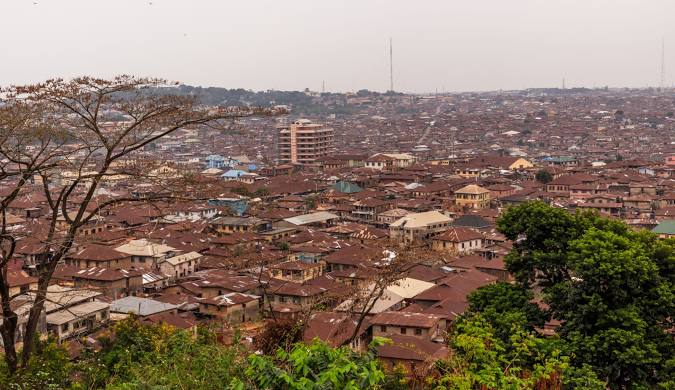
” Brown Roof” City: Known for its traditional brown-roofed houses, the city became Nigeria’s largest indigenous city and a center for education, famously hosting the first university in Nigeria (University of Ibadan).
Significant Historical Events:
1829: Established as a war camp during the Yoruba civil wars.
1893: Becomes a British Protectorate.
1929: Construction of the popular Adibisci Adiko “99 Rooms” Mansion.
1948: University of Ibadan established.
1959: Western Nigerian Broadcasting Corporation starts television broadcasting, the first in Africa.